|
|
|
|
 |
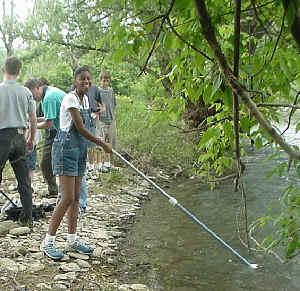
What is a watershed? Consider a small stream high in the mountains. Its watershed consists of the few underground springs and precipitation runoff from the land just above it. As the stream flows downhill, it enters successively larger bodies of water, including a bigger stream, a river, perhaps a lake, and eventually the ocean - all of which have correspondingly larger watersheds. Watersheds of all sizes have complex processes affecting the quality of the water draining out of them. Of course, humans use water for drinking, cleaning, cooking, and carrying away waste. To obtain water for these uses, we have built pipes, dams, water treatment plants (both for treating water before it enters our homes and after it leaves them), and other structures for transporting water. Because we depend on water that is free of pollutants and as clean as possible, it is often necessary to responsibly manage the watersheds that provide the water we use. Indeed, many towns and cities have watershed management plans to ensure the quality - and quantity - of their water sources. As watersheds become developed, stormwater runs off from roads, fields, parking lots, and buildings. Roadside ditches are designed and managed to prevent flooding of these structures by providing rapid flow of runoff water. However, impacts on quantity and quality of water in streams and lakes typically is not considered when ditches are designed, built, and maintained. Through investigations of roadside ditches, students can learn about surface water runoff and its impact on downstream waters. Student investigations of stormwater runoff in roadside ditches
Other Ideas for Student Water Quality Experiments (PDF files):
|
|
||
Copyright © 2009 Environmental Inquiry, Cornell University and Penn State University |
||||


 Watersheds